



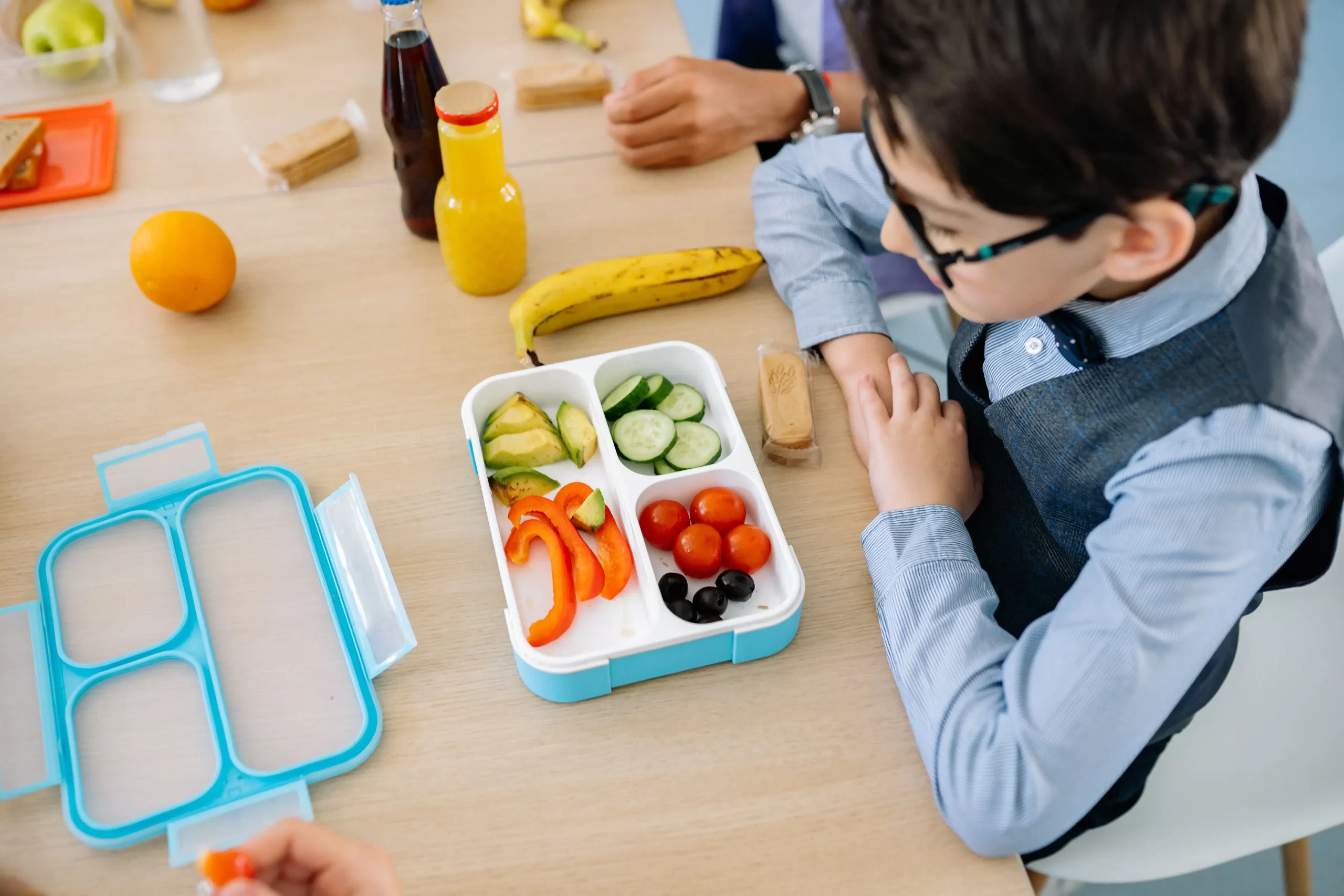
You read the label on a biscuit packet before it goes into your child's lunchbox. Sugar, preservatives, palm oil — you check, because you are a careful parent. Then your child picks up a phone, and in the two hours before dinner consumes three hundred pieces of content made by strangers whose only job was to keep him from looking away. That packet has no label. Nobody checks it. It is eaten every single day.
The Second Diet
The yogic tradition has a word that is usually translated as food: ahara. But in the shastras, ahara was never only what enters the mouth. It is everything the human system takes in — what the eyes watch, what the ears hear, what the mind dwells on. The Chandogya Upanishad puts it plainly: ahara shuddhau sattva shuddhih — when the intake is pure, the inner being becomes pure. The rishis considered a sight or a sound to be as much a meal as a bowl of rice.
Which means every child is on two diets. One you manage carefully. The other — the diet of the mind — is being planned by an algorithm.
What the Mind Is Fed
4-second cuts Notifications The comparison feed Background TV AutoplayWhat Nourishes It
Ten slow breaths One thing at a time Food with attention The outdoors Unbroken sleepTwo diets, eaten daily. Only one has a parent watching it.

What the Mind Is Eating Now
Look honestly at a single day. Video cut every four seconds, because the editor knows attention wanders at five. Autoplay, so no decision to continue is ever required. Notifications engineered to arrive just when interest fades. A background television narrating adult worries in the same room where homework happens. The comparison feed — other children's marks, other families' holidays. None of it is evil. All of it is intake. And the young mind, like the young stomach, digests whatever it is given and builds itself out of it.
What This Diet Produces
Parents describe the symptoms to us in nearly the same words every time. He cannot sit with his books for ten minutes. She is restless the moment the screen goes off. He hears me but does not listen. The exam fear starts a week before the paper. We spend a great deal of effort treating these as behaviour problems — with rewards, punishments, tuition, timetables.
But a child who has consumed four hours of four-second cuts has been in training. Trained, thoroughly, for distraction. When he then faces a mathematics problem that offers no reward for thirty slow minutes, he is not being disobedient. He is doing exactly what his mind's diet has built him to do. The restlessness is not in the child. It is in the intake.
This is not written to add to a parent's guilt — there is enough of that. You did not choose this menu. It arrived by default, with the device, with the times. But once you see it as a diet, something useful happens: diets can be changed.
The Correction Is Not a Ban
The instinct is prohibition — snatch the phone, cancel the cartoons. The yogic view is quieter and, in our experience with thousands of families, far more effective. You do not fix a poor diet only by removing what is bad. You fix it by adding what is nourishing, until the system itself begins to prefer it.
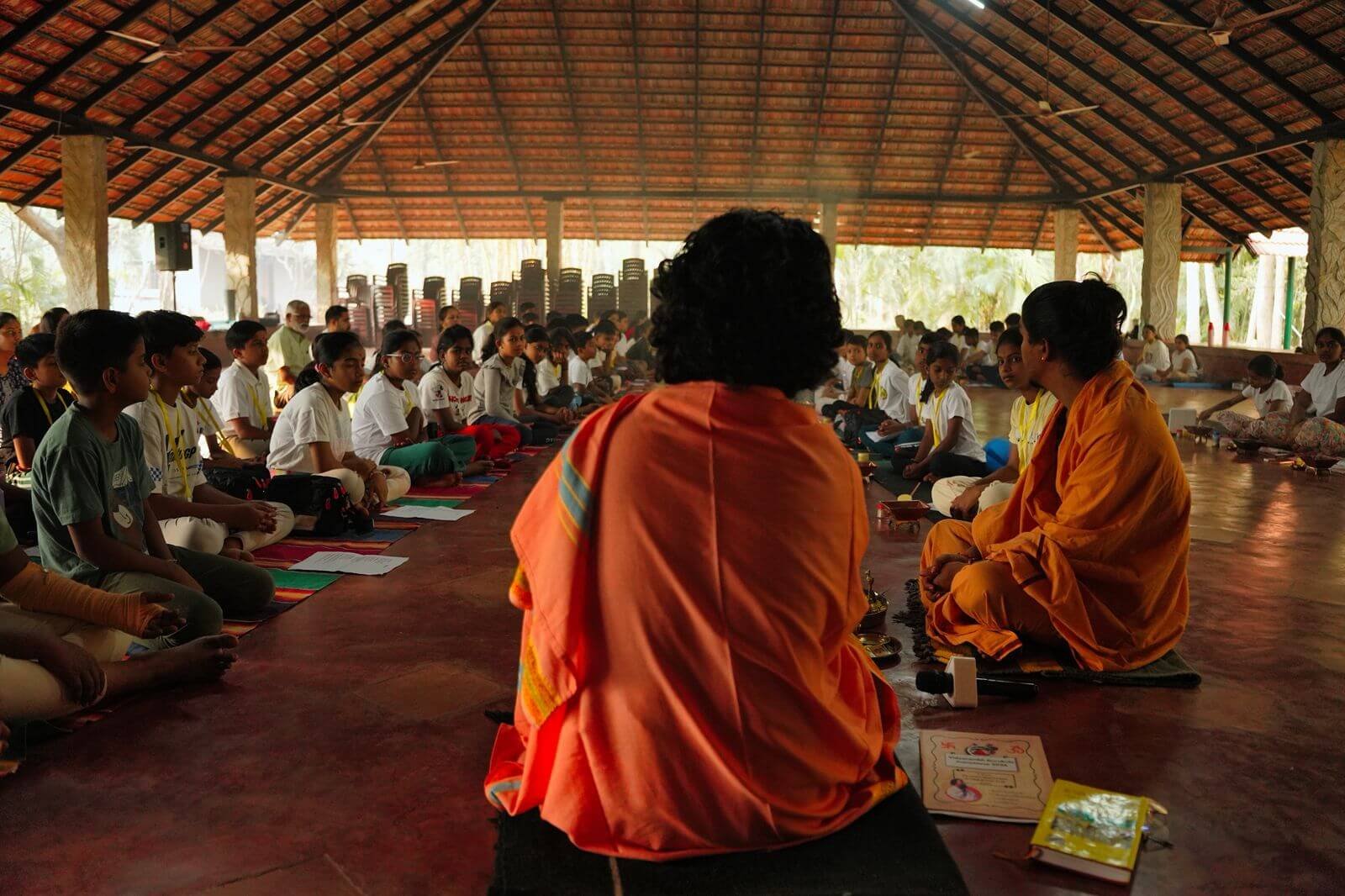
This is exactly how a gurukula day is built. It is an architecture of intake. Waking before the noise of the world begins. Breath and Surya Namaskara before any information arrives. Food eaten with attention, not in front of a screen. Study placed at the hour when the mind is freshest. Dusk without devices. Sleep treated as seriously as any lesson. Nothing in that day punishes the child — the day itself feeds the mind differently, and the mind rebuilds accordingly.
“We check what goes into the child's mouth three times a day. What goes into the child's mind, we do not check even once. Then we are surprised by what the mind becomes.”

Begin With Three Small Meals
You do not need an ashrama to begin. Start the way any sensible diet starts — with three small, repeatable changes:
- One meal a day with no screens — anywhere in the house. Food eaten with attention is the oldest ahara practice there is, and children copy it faster than adults do.
- Ten slow breaths before study. Not meditation, no app, no instruction beyond: sit, close the eyes, breathe slowly ten times, then open the books. Watch what it does to the first twenty minutes.
- The last half hour before sleep belongs to no device. A story, a conversation, or simply quiet. What the mind eats last, it digests all night.
Small meals, yes. But a diet is nothing except small meals repeated. Within weeks, most parents tell us the house itself feels different at those three moments — and the child, without a single lecture, has begun to taste the other kind of intake.
If this essay named something you have been sensing in your own home, the Vision page tells the fuller story — of what childhood looked like when the mind's diet was designed on purpose, and what we are rebuilding in Shivapura.
Read the Vision