

The phrase arrives carrying baggage. Film posters, glowing foreheads, YouTube thumbnails with lightning between the brows. By the time most people ask the question seriously — what actually is the Third Eye? — they are choosing between two poor answers: a superstition to be dismissed, or a superpower to be craved. Both are wrong, and both are lazy. The real answer is older than the memes and more precise than the mysticism. It deserves to be laid out plainly.
What Most People Think It Is
Popular culture treats the Third Eye as a hidden organ that snaps open and grants magical sight — the spiritual equivalent of a secret weapon. This picture manages to overshoot and undershoot at the same time. It overshoots, because it promises sorcery. It undershoots, because it treats a lifelong faculty as a party trick. When something has survived in an unbroken tradition for thousands of years, the first respectful question is not “is it magic?” but “what exactly did the tradition mean?”

What the Shastras Said First
The tradition is specific. Between the brows sits what the yogic texts call the ajna chakra — and the name itself is the first clue. Ajna means command. Not vision, not magic — command: the seat from which perception is directed, the point where attention itself is governed.
The Bhagavad Gita treats inner sight not as poetry but as a grant. In the eleventh chapter, Krishna tells Arjuna: na tu mam shakyase drashtum anenaiva sva-chakshusha; divyam dadami te chakshuh — you cannot see this with these eyes of yours; I give you divine sight. Arjuna's physical eyes were open the whole time. They were simply the wrong instrument. And it is worth remembering who narrates that scene: Sanjaya, seated far from the battlefield, describing the war to the blind king Dhritarashtra — granted divya drishti precisely so that distance would not matter.
The Garbha Upanishad goes further back still, describing the unborn child as possessing a knowing awareness before the senses have anything to report. Across these texts the position is consistent: perception does not end at the sense organs. There is a faculty behind them, it has a seat, and it can be cultivated deliberately.
Where all three agree — and where this essay lands.
What Science Suspects
Here honesty matters, so let us be exact. Biology knows of literal third eyes: the tuatara of New Zealand carries a functioning parietal eye on top of its skull — lens, retina and all — and many reptiles retain light-sensing tissue there. In humans, the pineal gland sits deep in the same region, regulating our rhythms of waking and sleep through melatonin. Descartes called it the seat of the soul; modern medicine calls it an endocrine gland. The anatomical echo is intriguing. It proves nothing by itself.
What research does document, repeatedly, is something different and in a way more useful: sustained attention training changes the brain that does the attending. Long-term meditators show measurable differences in the networks governing focus, sensory processing and emotional regulation. Interoception — the perception of what is happening inside one's own body — sharpens with practice, like any skill.
So let this be said without hedging in either direction: no laboratory has certified seeing without the eyes, and we do not ask you to believe otherwise on our word. What stands on evidence is narrower and still remarkable — that attention is not fixed at birth; it is the most trainable faculty a human being has. The shastras and the studies, each in their own language, agree on that much.
What It Is, Really
Strip away the effects and the eye-rolling, and this is what remains. The Third Eye, in this tradition, is attention matured into an instrument. The training is ancient and methodical: the senses are drawn inward — the Yoga Sutras call the step pratyahara — until the mind stops being dragged by every sound and flicker, and begins, for the first time, to look steadily. What most people call intuition, clarity, presence of mind — the tradition would say these are early lights of the same faculty.
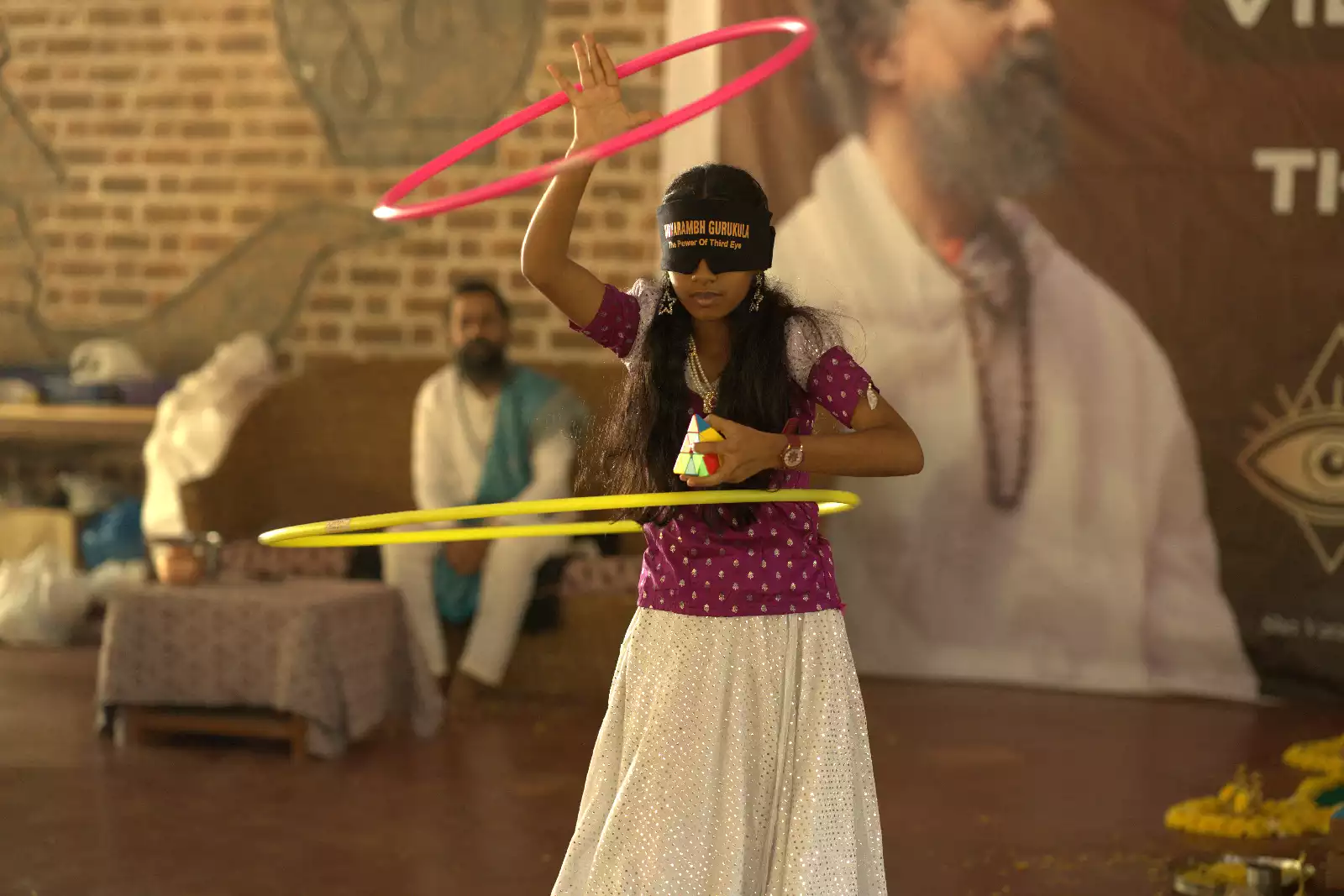
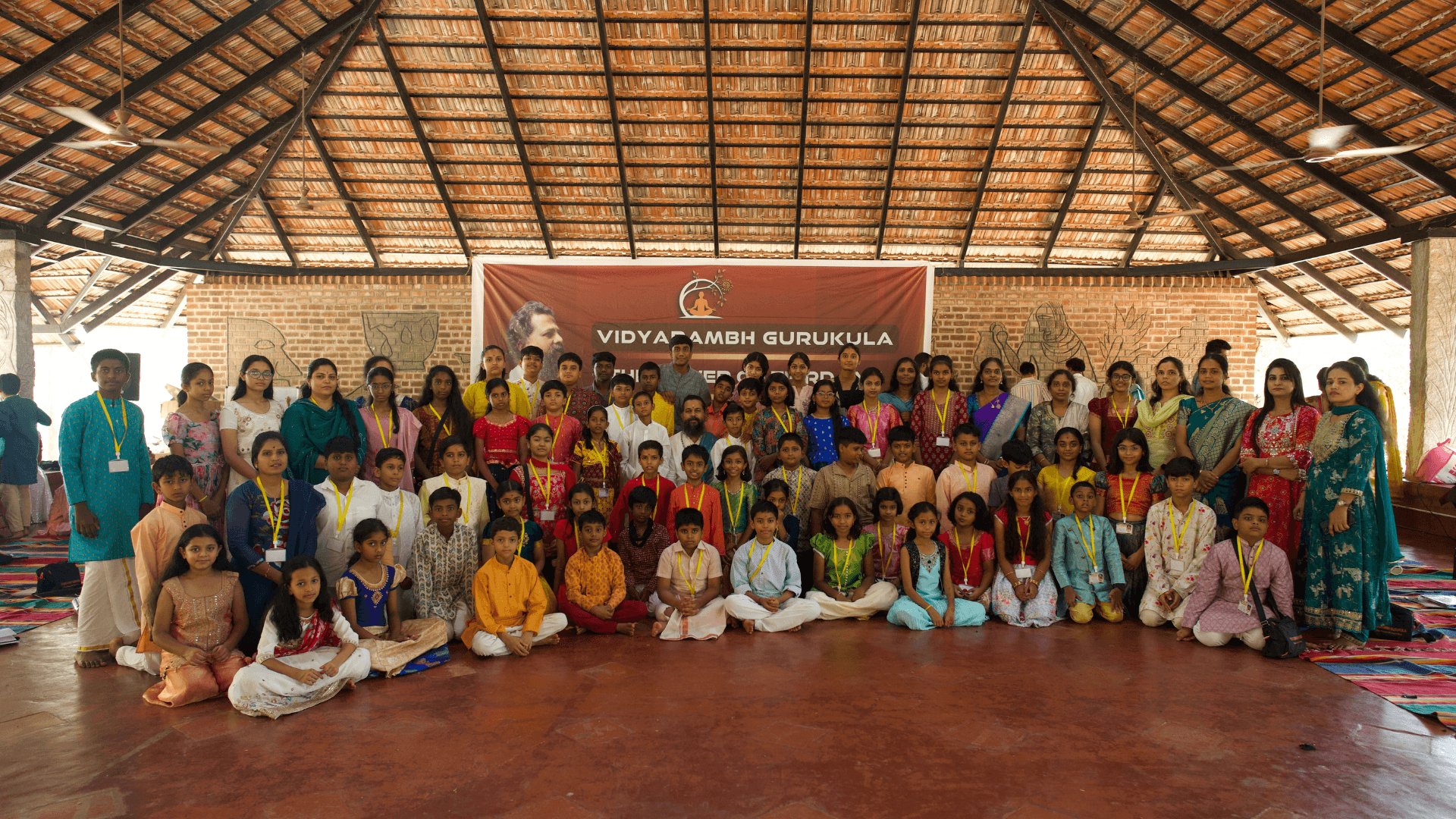
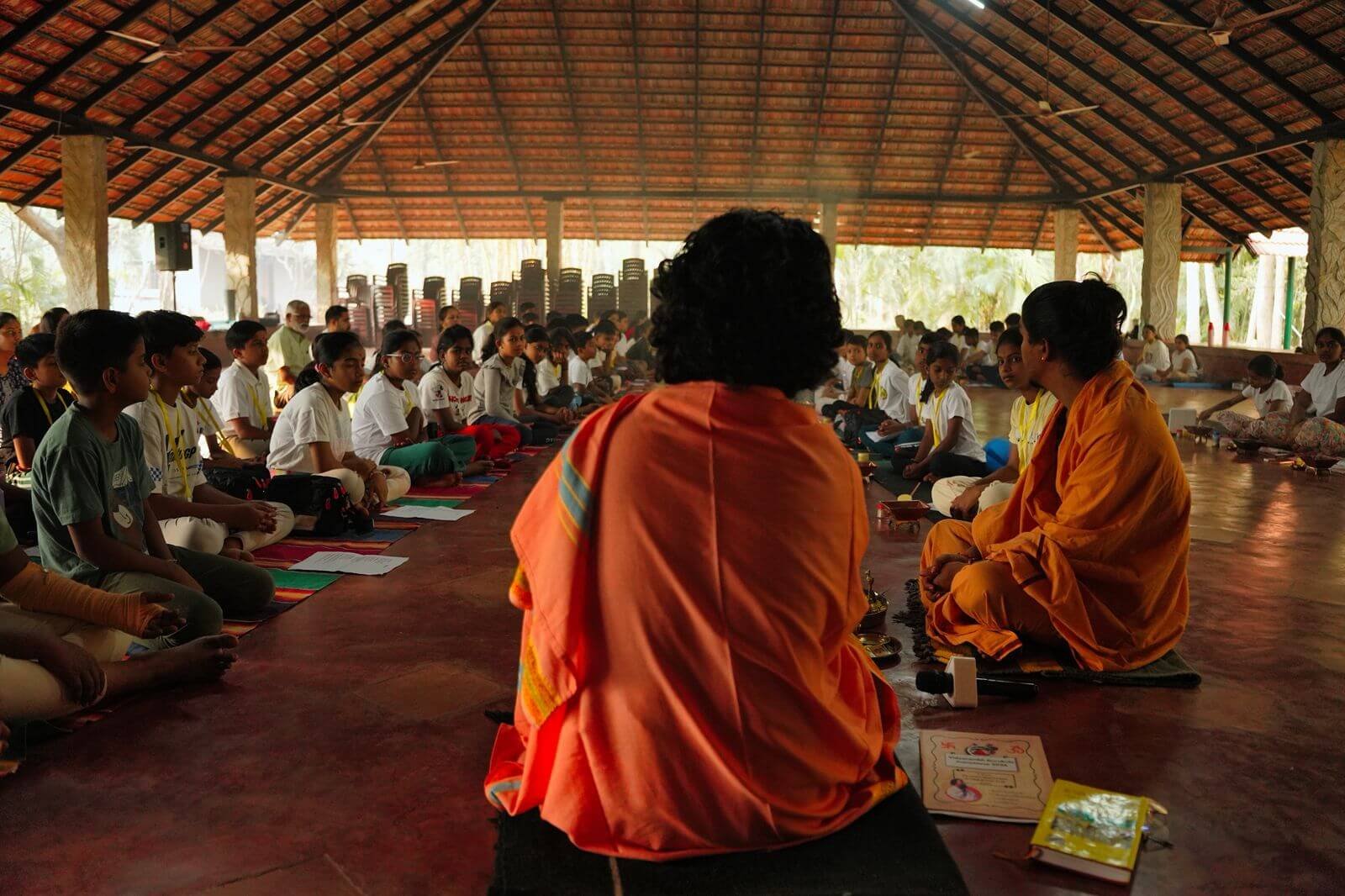
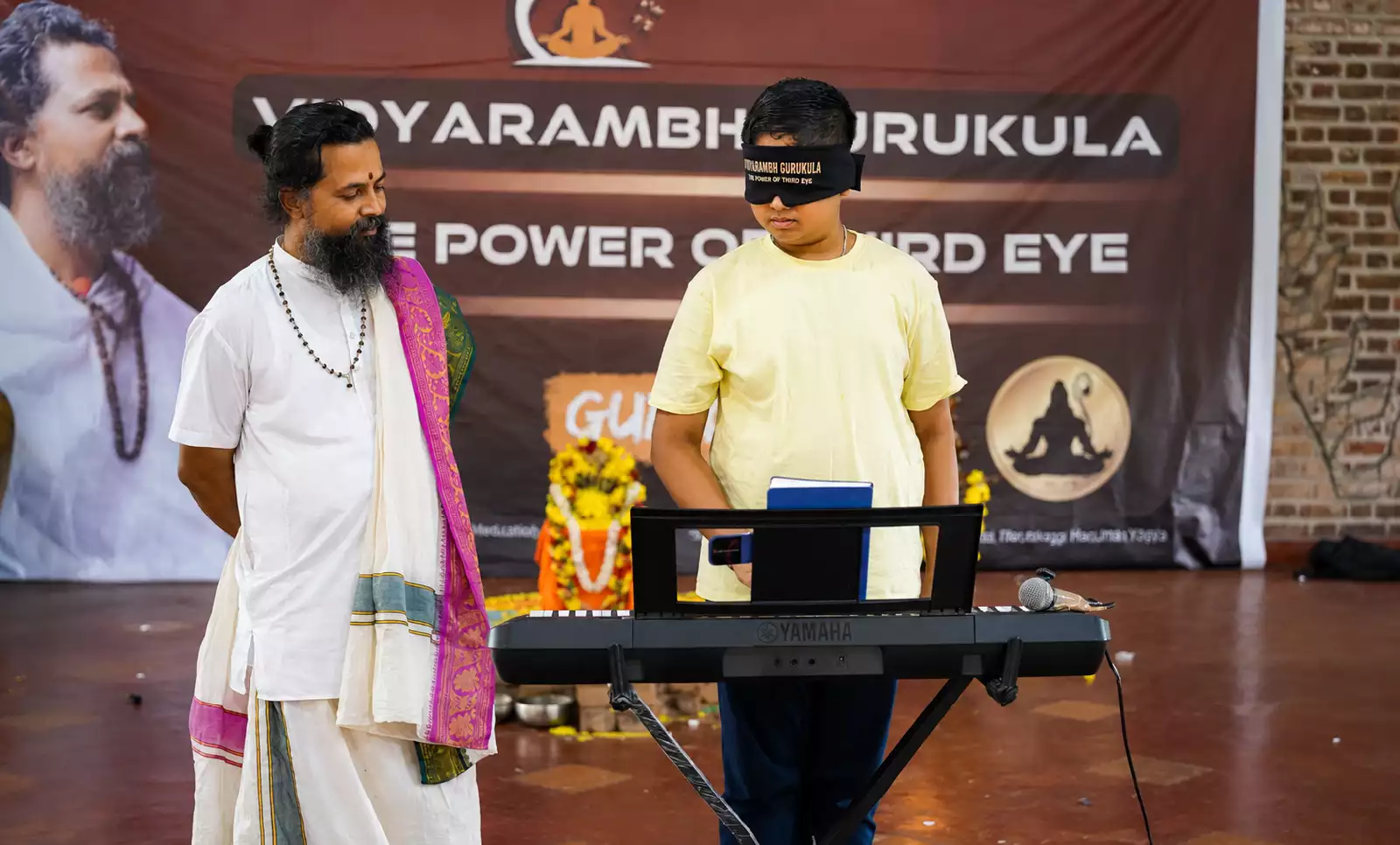
This is why the work begins so naturally with children. At our events, parents watch blindfolded children read pages and describe objects — and the blindfold makes for an unforgettable demonstration. But ask the parents what changed at home, and they rarely mention the blindfold. They talk about a child who sits with his books without being forced. Who sleeps calmly before an exam. Who listens — actually listens. The demonstration lasts a minute. The faculty lasts a lifetime.
“People ask me — will my child see without eyes? I ask them — does your child see clearly with eyes? Let us begin there. The Third Eye is not the ability to see something strange. It is the end of seeing everything half.”
And for Adults?
The ajna does not close after childhood — it opens more slowly, because an adult mind has more traffic to quiet first. That is a longer essay of its own. It is enough to say here that the path exists for both: for children between six and sixteen, whose attention is still soft clay, and for adults willing to work with a stiffer material and a deeper reason. The mystery is not whether the faculty exists. It is why we train every muscle in a child except the one that aims all the others.
If you would rather see this than read about it — parents watch it at every event, and children begin the training in a single 3-hour workshop. The programs page explains the path for children and for adults, plainly.
See the Programs